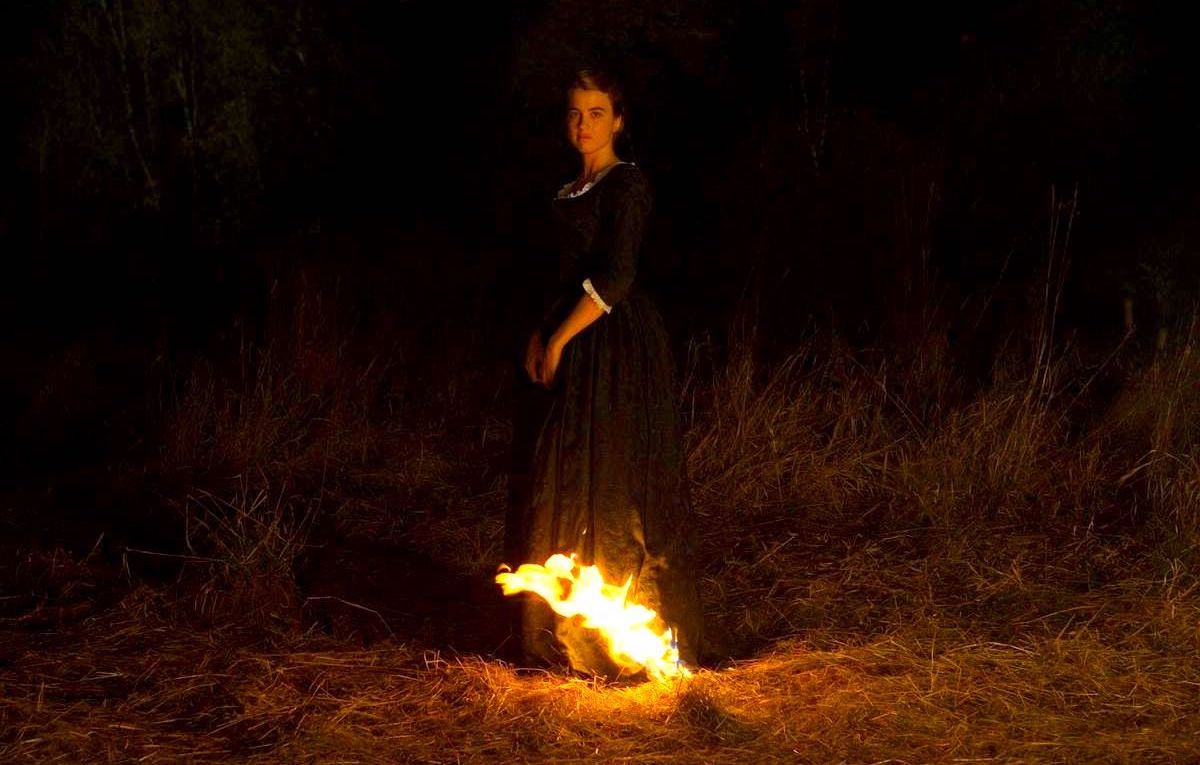
Love Dialogue: Céline Sciamma on Portrait of a Lady on Fire
February 12, 2020


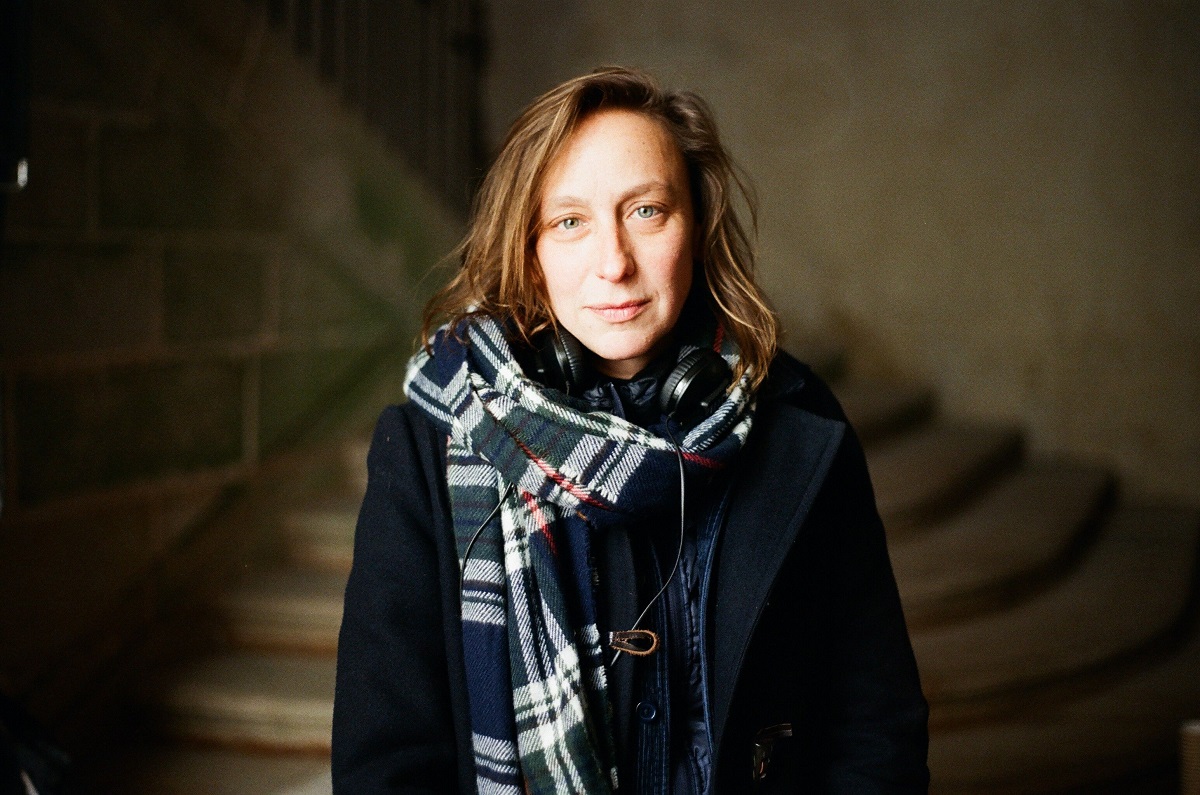

About Céline Sciamma
Céline Sciamma is a French screenwriter and film director.
| Born | November 12, 1978 (age 43 years), Pontoise, France |
|---|---|
| Height | 5′6″ |
| Awards | Cannes Film Festival Award for Best Screenplay |
| Nominations | César Award for Best Director |
| Education | La Fémis, Paris Nanterre University |
| TV shows | #FFHH19 / Bargespräch mit Céline |
Incandescent filmmaking of the highest order, the kind that permanently brands you with its soul-reaching flame, Céline Sciamma’s “Portrait of a Lady on Fire,” an 18th century lesbian romance between a bright painter and her strong-willed subject, unquestionably turns the French auteur into a blazing master.
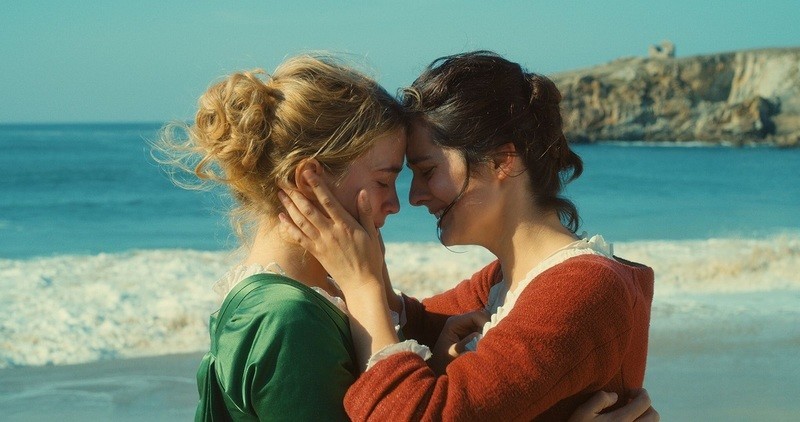
Saturated with the emotional colors of actresses Adèle Haenel and Noémie Merlant, which materialized onto to the cinematic canvas via cinematographer Claire Mathon’s brush made of natural and candlelight, Sciamma’s palette paints a picture of desire so vivid it elicits a physical reaction laced with sensuality on those who admire it. A duel of gazes, a battle of subtle exchanges where no one easily surrenders until the embers of passion are just too feverish to resist—all, thankfully, without a single man in sight to crowd their frame or hinder their revelry.
For Sciamma, the implications of their fiery liaison resonate with the erasure of women from the history of invention and artistic creation, and the objectification they experienced throughout the centuries at the hands of the male gaze. Furthermore, and perhaps even more importantly, “Portrait” shines like a testament to the little-discussed truth that progress for women has come in ebbs and flows and not in the form of a constant, upwards stream of change.
Forthright about her intentions, her detractors, and the love dialogue she developed on the page and on set, the bodacious director opened up about her Cannes-winning, Golden Globe-nominated masterwork on the art of love and the love of art.
You’ve previously said that desire is about delay. Could you expand on that in relation to the film and how we as audiences experience it?
The film is—in English you have a word for it, which is cool—slow burn. We don’t have a word for that. Maybe that’s why French people found it boring, I don’t know. I really wanted to tell a love story but not escaping this idea of the rise of desire, how it is built, how it is born, and take the time to look at that. The first kiss in the film happens at an hour and 21 minutes, which really departs from the romantic comedy convention. I wanted to depart from this idea of love at first sight, and really try to give this experience to the audience that they know very well, which is falling in love.

This choreography works like echo, it ripples, it's like if you throw a stone in water, it comes from far way...It’s about playing with delay and frustration, and being brave about it.

In rewatching your filmography recently, something that became notable is that all your works before “Portrait” observe young people coming to a realization about who they are, whether that’s their sexual orientation or their place in society. What do you find so interesting about teenagers coming to terms with their truth and did that slip into “Portrait” at all?
With this one they are 30 years old and they are really grown up, so I think of “Portrait” in a different way than the first three films. I had the privilege to make cinema when I was very young. When I made my first film I was 25 years old, and that’s pretty rare. Being so young my experience and the thing that I wanted to talk about was teenagehood, plus in France we have that strong tradition of the coming-of-age story being made as your first film.
For me it was also a way to find out what kind of director I was, without the pressure, being so young, of having a cast that was older and more experienced. Coming-of-age stories are a way to find your own language and also find out what kind of relationship you want to have with your cast without a power dynamic, while being kind of equals, inexperienced, and being candid about what making cinema is. What kind of language do you want to put out there and what kind of power dynamic you want on your set. Working with a very young cast puts you very much in charge, but at the same time you can work in a very horizontal way. That’s something I discovered and that I love, and that I keep doing, and that I would do even with Catherine Deneuve. Now that’s the only way I want to work.
Coming-of-age stories are a kind of laboratory to try out stuff. It was a safe space for me to experiment and find my voice. Also, coming-of-age stories are a genre that includes all genres. For instance, with “Water Lilies” I always thought that going through these changes at the beginning of adolescence could also be a horror film or a vampire film. You get to try out several styles of cinema, different types of scenes. It’s a great way to experiment, and I got to experiment very different things from one film to another. I was really building prototypes, and I feel like “Portrait” is my grown up film.
Even the films you have written for other people to direct, like André Téchiné’s “Being 17” or the animated feature “My Life as a Zucchini,” are coming-of-age stories.
With the films you write for others, they come and get you based on what you already did. You have a certain craft and you are identified with a genre. That’s also why, I guess, I was asked to write these films. It’s a totally different job writing for others. I really wanted to be a screenwriter because I wanted to be able to not rely only on my urge or desire. I also didn't want to direct films to make a living, so that when I would write for myself it would be about pure desire for cinema and not something I would have to do to live. I never found it hard to let those screenplays go. Everybody is always telling me, “Is it not hard to let go?” and I’m like, “No” [Laughs]. It’s really cool. I love collaboration. I love this thing where you write a script with somebody and it becomes something else. For instance with “My Life as a Zucchini,” three years after writing it I discovered the film. I love directors, I have a passion for directors, so I really enjoy working with other directors and I have no problem letting go.
This is the first time you worked with cinematographer Claire Mathon. All of your previous films were photographed by Crystel Fournier. Was there a reason you wanted to work with someone else this time around. What led to this transition?
I had been looking at Claire’s work for several years, and I had a lot admiration for her work. For this film I wanted to work with her. In experimenting with Crystel, we had been building this world together and as I wanted to move on, I wanted to meet somebody new. Also, I was very impressed by Claire Mathon’s work with natural light in “Stranger by the Lake.” It felt like with this film we could definitely invent something together. It has been a joyful collaboration I must say. It wasn’t hard at all. It felt totally fluid and obvious, we have a lot in common.
Tell me about the language of desire in the film, in the sense that there’s a romantic desire between the two protagonists, but also an artistic one. How do these two intertwine in the film?
I wanted a love dialogue that was also an artistic dialogue. It’s a film about love and art, and love for art, and how love is an education to art, and even a curation for our future curiosities, and how art can console us from lost love. To me that is a very strong dynamic. As cinephiles, as lovers of cinema, which is a very democratic art, we know that feeling. Everybody has a film that has helped them. Talking about women artists, I wanted to show a new power dynamic within a love story, but also new power dynamics in artistic collaborations and depart from this iconic tradition of the muse being this silent, fetishized woman.
Most women then didn’t have the opportunity to make art, some of them did because they wee daughters of painters or wives of painters. But mostly, the opportunity they were given to be in the workshop of the painter was to be a model. They seized this opportunity and they put their brains into this work. It’s about showing the history of art from women’s perspective. Showing a woman artist at work, but also showing a model at work.
It’s a film about love and art, and love for art, and how love is an education to art, and even a curation for our future curiosities, and how art can console us from lost love.
Of course Adèle Haenel and Noémie Merlant are fantastic in the film, but I wanted to ask you about Luàna Bajrami who plays Sophie, a character that’s not an artist or noble. On the surface her experience as a woman at the time is different from that of the two leads.
I really wanted to embody sorority on screen, and sorority has this political effect that it can abolish social hierarchy. And as the film was trying to build a love dialogue with equality, I also wanted not to play with the buttons of social hierarchy with the characters. Even though there is a strong hierarchy, we are not playing with that. She is never an accessory to the story or just an extra just carrying a tray. You never see her with Valeria Golino, who plays the mother. Sophie makes no appearance when she is in the frame, because she has her own journey, her own goal, her own desire, and I really wanted to show that. Luàna Bajrami, she is 17, and I saw her the first day of casting while looking for the part of Sophie. She is a very bright actress, and she is also a director herself. She directed her first feature last summer. You’ll hear from her.
When speaking or writing about “Portrait,” some people have refused to use the word “lesbian.” Do you find it offensive that they don’t want to acknowledge the film as what it is, a lesbian romance, or did you expect such push back in the language used around the film?
I’m realizing with this film how the word “lesbian” is never used, and the effect of it being used on art. Even when I, during promotion, would say “lesbians,” sometimes in the article they would change the word. So what’s behind this word? I don’t find it a scary word, but what’s behind the word? Behind the word is a project, and I think there’s something dangerous in that word. We know because Monique Wittig said that lesbians are not totally women because they are escaping a part of the patriarchy, at least domestically or romantically. And this is very, very subversive and also that’s why fiction has been really harsh on lesbian characters, because they are seen as dangerous characters. I’m not offended by the fact that people don’t use that word, but I’m just noticing it and I’m analyzing it. It’s quite interesting. It’s a word I definitely use all the time. I don’t use queer, this movie is definitely a lesbian imaginary and it’s an imaginary that's really inclusive. It’s not narrow. It’s powerful. We wouldn’t fear the word if it wasn’t powerful.
Early on in our chat you made a comment about people in France not responding positively to the “Portrait.” Tell me about the reaction there.
Well quite different than here I must say, very different. The critics that didn’t like the film would say that it lacked flesh. They don’t find it erotic. Language tells a lot about a culture, and we don’t have the same culture of critics in France. We are a very center-right country, so the critics are politicized that way. It’s been radically different to the reception here, and kind of everywhere—the film is doing really well throughout Europe. In France we have a very bourgeois industry because we are so privileged. There’s a good side to that, but it’s also conservative and very male-driven, including the critics. They are not all one thing, but generally. The critics on websites are different. As a good example, Cahiers du Cinema, they gave the film their lowest rating. That means, “I don’t want to look at it.” But it's okay.